- English
- Español
- Português
- русский
- Français
- 日本語
- Deutsch
- tiếng Việt
- Italiano
- Nederlands
- ภาษาไทย
- Polski
- 한국어
- Svenska
- magyar
- Malay
- বাংলা ভাষার
- Dansk
- Suomi
- हिन्दी
- Pilipino
- Türkçe
- Gaeilge
- العربية
- Indonesia
- Norsk
- تمل
- český
- ελληνικά
- український
- Javanese
- فارسی
- தமிழ்
- తెలుగు
- नेपाली
- Burmese
- български
- ລາວ
- Latine
- Қазақша
- Euskal
- Azərbaycan
- Slovenský jazyk
- Македонски
- Lietuvos
- Eesti Keel
- Română
- Slovenski
- मराठी
- Srpski језик

How Can a Food Cart Help You Build a Profitable Mobile Food Business?
Table of Contents
- Why Is a Food Cart a Smart Investment?
- Key Benefits of Using a Food Cart
- How to Choose the Right Food Cart
- Essential Features to Look For
- Food Cart vs Traditional Restaurant Comparison
- Common Buying Mistakes to Avoid
- Maintenance Tips for Long-Term Use
- Frequently Asked Questions
Why Is a Food Cart a Smart Investment?
For many food entrepreneurs, launching a traditional restaurant requires major capital investment, long lease commitments, and heavy monthly expenses. A food cart reduces these barriers significantly. It allows business owners to enter high-footfall markets such as festivals, parks, commercial streets, campuses, and tourist zones without being tied to one fixed location.
Unlike brick-and-mortar restaurants, food carts offer location flexibility. If one area underperforms, operators can relocate to a more profitable zone. This mobility creates stronger revenue opportunities and helps businesses test markets before scaling.
Qingdao Oriental Shimao Import and Export Co., Ltd. manufactures modern food cart solutions designed for durability, mobility, and business efficiency, helping vendors meet both startup and expansion needs.
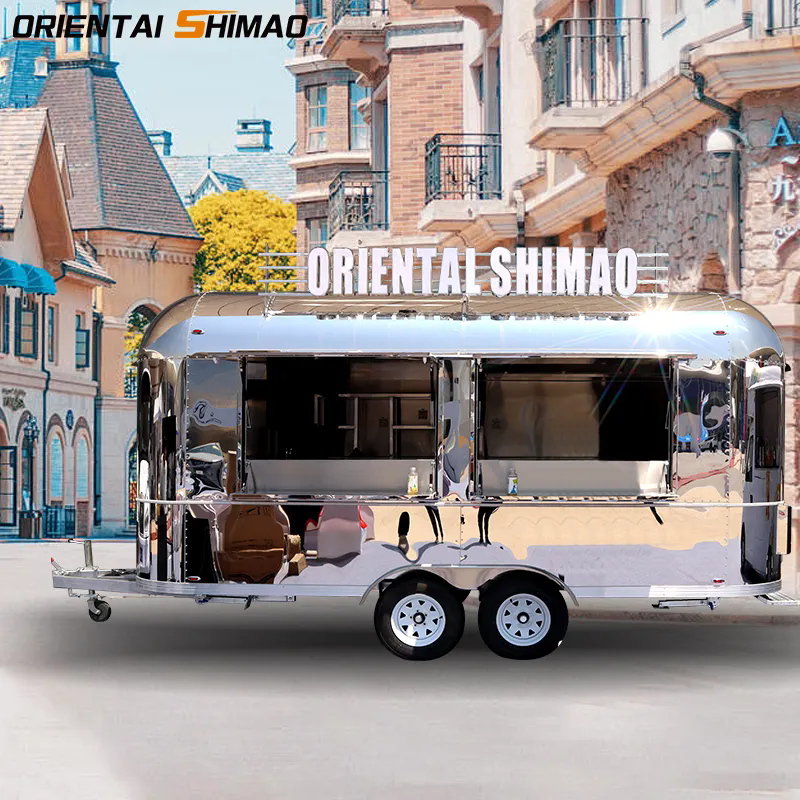
Key Benefits of Using a Food Cart
- Lower startup costs compared to traditional restaurants
- Flexible selling locations for higher customer reach
- Reduced staffing requirements
- Faster return on investment
- Easy branding customization
- Suitable for seasonal and event-based business models
Because food carts are compact and efficient, operators can maintain lean workflows while still serving large customer volumes during peak times.
How to Choose the Right Food Cart
Selecting the right food cart depends on your menu type, target market, operating environment, and local regulations. Before purchasing, consider the following:
- Define your food category (coffee, snacks, ice cream, barbecue, beverages, etc.)
- Estimate daily serving volume
- Check local licensing and health requirements
- Assess indoor and outdoor usage conditions
- Choose proper kitchen equipment integration
A coffee cart may prioritize espresso equipment space, while a fast-food cart may require fryers, refrigeration, and larger prep counters.
Essential Features to Look For
| Feature | Why It Matters |
|---|---|
| Stainless Steel Interior | Easy cleaning and food safety compliance |
| Insulated Walls | Temperature control for all-weather operation |
| Custom Equipment Layout | Improves workflow efficiency |
| Strong Chassis and Wheels | Safe transportation and durability |
| Branding Exterior Panels | Enhances visibility and customer attraction |
Reliable build quality directly impacts long-term operating costs. Poor-quality carts may require frequent repairs and disrupt service continuity.
Food Cart vs Traditional Restaurant Comparison
| Factor | Food Cart | Traditional Restaurant |
|---|---|---|
| Startup Cost | Low | High |
| Mobility | High | None |
| Operating Flexibility | Excellent | Limited |
| Monthly Overhead | Lower | Higher |
Common Buying Mistakes to Avoid
- Choosing price over structural quality
- Ignoring local regulatory requirements
- Buying undersized kitchen space
- Overlooking ventilation systems
- Failing to verify supplier after-sales support
Many first-time buyers underestimate future business growth and purchase carts too small for expansion, resulting in costly upgrades later.
Maintenance Tips for Long-Term Use
- Clean food surfaces daily after operation
- Inspect wheels and axles weekly
- Check electrical systems regularly
- Maintain generator and gas systems properly
- Protect exterior surfaces from rust and weather damage
Routine maintenance extends cart lifespan, reduces downtime, and protects your investment over many years of service.
Frequently Asked Questions
1. How much does a professional food cart cost?
Prices vary depending on size, equipment, and customization, typically ranging from several thousand dollars upward.
2. Can I customize the food cart layout?
Yes. Most manufacturers, including Qingdao Oriental Shimao Import and Export Co., Ltd., offer custom interior layouts based on menu needs.
3. Is a food cart suitable for year-round operation?
Yes, with insulated construction and weather-resistant materials, many carts operate efficiently in all seasons.
4. What foods can be sold from a food cart?
Coffee, burgers, tacos, desserts, ice cream, beverages, barbecue items, and many other categories.
Final Thoughts
A food cart is more than just a mobile kitchen—it is a strategic business asset that lowers entry barriers, increases location flexibility, and accelerates profit potential. If you are ready to launch or expand your mobile food venture, choosing a trusted manufacturer is essential.
Explore premium customized food cart solutions from Qingdao Oriental Shimao Import and Export Co., Ltd. and take the next step toward building a successful mobile food brand. Contact us today to discuss your ideal food cart design and get expert support tailored to your business goals.